

What is the Business Professional and Occupational License (BPOL) tax?
It's a gross receipts tax which means businesses are taxed on all revenue generated even if the business lost money for the year. This puts a heavy burden on all businesses but especially restaurants and others with slim profit margins.
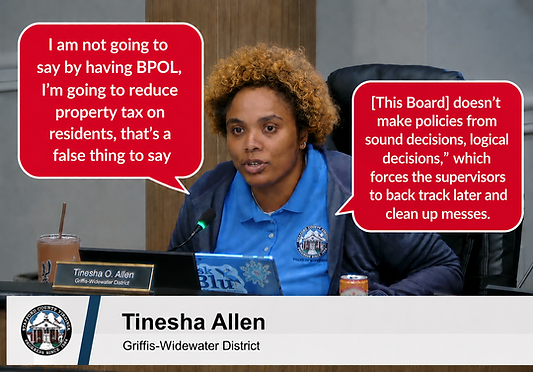
Highlights from the last BPOL meeting.

.png)
.png)
.png)
WHY OPPOSE THE BPOL TAX?
Stafford Residents and Businesses Are Already Paying More
Over the past several years, Stafford County has significantly increased the cost of living and doing business through higher property taxes (already 11-23% above our neighbors), raising the meals tax, rising assessments, commercial impact fees, and the highest hotel occupancy tax among Virginia counties. Adding another business tax would increase those costs even more.
High business taxes discourage new business investment in the County. Look at the decades of delays with the Aquia Town Center & The Garrison developments.
Stafford County must stay affordable for businesses and residents!

Stafford's Tax Burden Has Already Increased
Recent Tax Increases Include:
-
Stafford's real-estate tax rate is already 11-23% higher than our neighbors (FXBG, PWC, Spotsy & Fauquier)
-
Property taxes have increased 56% over the last 5 years.
-
New commercial transportation impact fees add $10x thousands to development projects.
-
Stafford has the highest transient occupancy (hotel) tax among Virginia counties.
-
Sales tax is scheduled to increase by 1% in Nov
-
The 6% meals tax is one of the highest in the state
Residents & Businesses are already paying enough.
BPOL Is Different Than Most Business Taxes
BPOL is a gross receipts tax.
This means businesses pay tax on their total sales, not their actual profit.
A business may owe BPOL even if it:
-
Made very little profit
-
Had unusually high expenses
-
Lost money during the year
This can place a heavier burden on businesses with narrow profit margins.
Small Businesses Would Be Hit the Hardest
Businesses most likely to feel the impact include:
-
Restaurants
-
Retail stores
-
Family-owned businesses
-
Contractors
-
Professional service firms
-
Startups
-
Local entrepreneurs
Many of these businesses already face higher operating costs from inflation, wages, insurance, rent, and property taxes.
All Residents Ultimately Pay the Price
When business costs increase, those costs are often passed on through:
-
Higher prices
-
Higher rents
-
Increased service fees
-
Reduced hiring
-
Fewer employee raises
-
Delayed expansion
Higher business taxes don't stay with businesses. They affect everyone.
Stafford Needs More Businesses, Not More Barriers
Many residents want to see more:
-
Restaurants
-
Retail shopping
-
Entertainment
-
Professional services
-
Local employers
Higher business taxes may make it more difficult to attract and retain those investments.
More Taxes Can Make Stafford Less Competitive
Businesses compare counties before deciding where to invest.
When neighboring communities have lower costs, they may become more attractive locations for:
-
New businesses
-
Employers
-
Restaurants
-
Retail centers
-
Commercial development
This can result in less convenient shopping & higher local prices.
Did You Know?
Stafford's proposed BPOL tax will require two new full-time auditors with limited “police powers” to visit our local businesses and investigate violations.
Spotsylvania has steadily raised its BPOL threshold with the stated intent to compete better against Stafford?
$200k → $750k → $1 mil → and in 2023 to $2 mil.
Stafford’s lack of a BPOL has been our ONLY competitive advantage for attracting companies. All of our other tax rates are higher. Now Stafford supervisors are pushing to bring it here.

THERE'S A BETTER OPTION
Instead of creating a new business tax, many residents believe Stafford should focus on:
-
Better management of existing tax revenue
-
Responsible spending
-
Growing the tax base through economic development
-
Reducing unnecessary barriers for businesses
-
Supporting local employers
Make Your Voice Heard!
Tell County leaders to reject the proposed BPOL tax and support policies that encourage local investment, job creation, and economic growth.
Contact Your Supervisor Today!
Garrisonville District • Pamela Yeung
(540) 273-2506
Rock Hill District • Crystal Vanuch
(571) 540-0303
Aquia District • Maya Guy
(826) 204-0127
Falmouth District • Kecia Evans
(540) 940-4692
Hartwood District • Darrell English
(540) 295-5974
George Washington District • Deuntay Diggs
(826) 204-0767
Griffis Widewater District • Tinesha Allen
(540) 940-5099
Stafford County Economic Development Director
• Liz Barber
Speak at An Upcoming Meeting
The Board typically meets on the first, third and fourth Tuesday of each month. The 4th meeting is reserved for work sessions.
Current Meeting Schedule
September 15, 2026 - 6:30pm
News Article Links
Stafford County Supervisors schedule public hearing on BPOL - August 19, 2026 Fredericksburg Free Press